
China is one of the oldest civilizations in the world—a land whose history stretches back more than five thousand years. Across this vast territory, generations of kings, thinkers, warriors, and artists lived and left lasting marks on human culture and civilization.The Beginning of Civilization Along the Yellow River
The roots of Chinese civilization emerged along the Yellow River, where early farming communities, pottery, housing, and pictographic writing developed. This period laid the foundations of Chinese culture and made China one of the earliest centers of civilization.
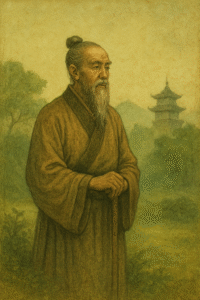
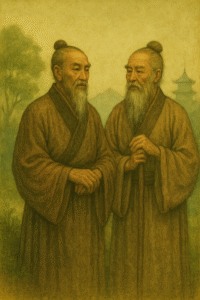
The Era of DynastiesOver time, powerful dynasties ruled China. The Shang Dynasty was the first recorded government, followed by the Zhou Dynasty, known for strong philosophical and administrative systems. During this era, major schools of thought such as Confucianism and Taoism emerged, shaping society and politics for thousands of years.
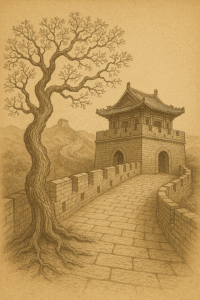
Unification of China and the Great WallIn the 3rd century BCE, Emperor Qin Shi Huang unified all the states and established the first centralized Chinese empire. He ordered the connection of various defense walls to create what later became known as the Great Wall of China, built to protect against invasions from the north. Today, it stands as one of the world’s most iconic structures.
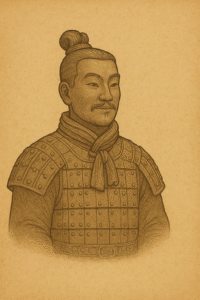
A Golden Age of Culture and Innovation
During the Han Dynasty, China became one of the most powerful empires on Earth. Advancements in papermaking, astronomy, medicine, and the development of the Silk Road transformed China into a center of global trade. The Silk Road played a major role in the exchange of goods, culture, and knowledge between East and West.
The Brilliant Tang and Song Dynasties
Under the Tang Dynasty, art, poetry, and trade reached extraordinary heights. Cities such as Chang’an became hubs of wealth and culture. Later, the Song Dynasty introduced innovations like printing, gunpowder, and the compass—discoveries that shaped world history.
Mongol Conquest and the Yuan Dynasty
In the 13th century, the Mongols under Genghis Khan conquered large parts of China. During the rule of Kublai Khan, the Yuan Dynasty was established, turning China into a major part of the largest empire in history. Despite hardships, this era allowed significant cultural exchange between East and West.
The Ming Dynasty and Architectural Marvels
After the Mongols, the Ming Dynasty rebuilt China into a flourishing power. The Forbidden City, a grand complex of imperial palaces, was constructed during this time. Admiral Zheng He led massive naval expeditions that reached as far as Africa, showcasing China’s maritime strength.
The Final Imperial Era and the Modern Age
The Qing Dynasty was the last imperial government of China. Foreign influence, internal conflicts, and economic struggles weakened it, leading to its collapse in 1912. With the end of imperial rule, the Republic of China was formed, marking the beginning of a new chapter in Chinese history.
China’s Lasting Impact on the World
China is the birthplace of many important inventions, including paper, printing, gunpowder, tea, silk, and the compass. Its civilization has deeply influenced global culture, trade, and science, and it continues to be one of the most influential nations in human history.