
The history of France is one of the most influential, dramatic, and culturally rich narratives in the world. It stretches from ancient tribal civilizations to the rise of powerful kingdoms, groundbreaking revolutions, and the development of a modern democratic state. France’s cultural, political, and intellectual contributions have shaped Europe and left a lasting impact on global civilization.
1. Ancient France – The Land of the Gauls
Before France became a unified nation, the region was inhabited by Celtic tribes known as the Gauls. These tribes were fierce warriors who controlled much of Western Europe.
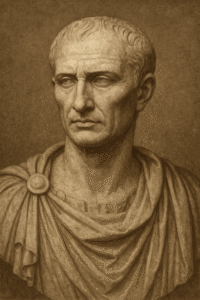
In the first century BCE, Julius Caesar led the Roman conquest of Gaul, bringing the region under Roman control. The Romans introduced:
Advanced roads and infrastructure
Urban planning
Latin language
New systems of law and governance
This period created the foundation for French culture.
—
2. The Franks and the Birth of “France”
After the fall of the Western Roman Empire, Germanic tribes invaded the region. The most powerful among them were the Franks, from whom France gets its name.
In the late 5th century, Clovis I, king of the Franks, unified several tribes and converted to Christianity—an event that shaped the identity of early France.
3. The Carolingian Empire and Charlemagne
In the 8th and 9th centuries, France became part of the great Carolingian Empire, led by Charlemagne (Charles the Great).
Charlemagne:
Expanded the empire across Western and Central Europe
Promoted education and literacy
Strengthened the Christian identity of Europe
After his death, the empire was divided, and the western portion evolved into the Kingdom of France.
4. Medieval France and the Growth of the Monarchy
The Middle Ages saw the rise of feudalism, the construction of magnificent cathedrals, and the formation of a strong French monarchy.
French identity grew stronger during this era.
The Hundred Years’ War
From the 14th to the 15th century, France fought a prolonged conflict with England known as the Hundred Years’ War.
The national heroine Joan of Arc, inspired by visions, played a crucial role in turning the tide in favor of France.
–
5. The French Renaissance
In the 16th century, French culture flourished during the Renaissance.
Kings invited Italian artists and architects to France, resulting in:
Beautiful castles
Advances in literature
Growth of philosophy and humanism
Writers like Rabelais and Montaigne emerged as major intellectual figures.
6. The Age of Absolutism and Louis XIV
The 17th century marked the height of French royal power.
Louis XIV, known as the “Sun King,” ruled with absolute authority.
His achievements include:
The construction of the Palace of Versailles
Strengthening royal administration
Making France the cultural center of Europe
Under his rule, French art, music, and literature flourished.
7. The French Revolution (1789)
One of the most important events in world history began in 1789.
High taxes, corruption, and economic crisis led the people to revolt against the monarchy.
The Revolution resulted in:
The fall of the Bourbon monarchy
The Declaration of the Rights of Man
The end of feudalism
The rise of democratic ideals
Its slogan remains iconic: Liberty, Equality, Fraternity.
8. Napoleon Bonaparte
After the Revolution, France fell into political chaos until Napoleon Bonaparte seized power.
He declared himself Emperor and expanded French influence across Europe.
Napoleon introduced:
The Napoleonic Code (a legal system still used worldwide)
Administrative reforms
Military expansion
Despite his defeat at Waterloo in 1815, Napoleon’s legacy continues to shape modern Europe.
–
9. France in the 19th and 20th Centuries
Throughout the 19th century, France shifted between empires, monarchies, and republics.
In the 20th century, France was deeply affected by World War I and World War II.
During World War II, France was occupied by Nazi Germany, but the French Resistance played a key role in liberation.
After the war, France became a founding member of:
The United Nations
NATO
The European Union
The modern Fifth Republic, established in 1958, brought political stability.
10. France Today
Modern France is:
One of Europe’s strongest economies
A global leader in art, philosophy, and culture
A major force in international politics
Known for its historical heritage and democratic values
From ancient tribes to modern democracy, France’s journey is a remarkable story of cultural evolution, innovation, and resilience.