
The American Civil War, fought between 1861 and 1865, stands as one of the most significant and transformative conflicts in the history of the United States. It was a war that reshaped the nation, challenged its ideals, and left permanent marks on its political, social, and cultural landscape. Rooted in decades of tension over slavery, economic differences, and states’ rights, the conflict erupted after Southern states seceded from the Union and formed the Confederate States of America.
During the early 19th century, the United States expanded westward, and with each new territory added to the nation, fierce debates emerged over whether slavery would be permitted there. The South depended heavily on plantation agriculture and enslaved labor, while the North was rapidly industrializing and increasingly opposed to the expansion of slavery. Compromises like the Missouri Compromise and the Compromise of 1850 temporarily eased tensions but failed to resolve the deeper issues dividing the nation.
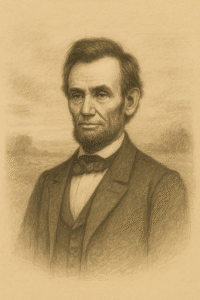
The election of Abraham Lincoln in 1860 acted as a turning point. Though Lincoln did not initially call for the immediate abolition of slavery, his opposition to its spread alarmed many Southern leaders. In response, eleven Southern states declared their secession and formed the Confederacy. The war officially began in April 1861, when Confederate forces fired on Fort Sumter in South Carolina.
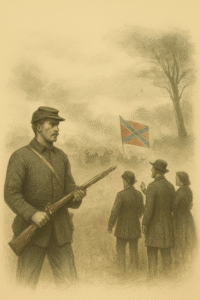
The Civil War became one of the bloodiest conflicts of the 19th century. Battles such as Gettysburg, Antietam, and Shiloh resulted in massive casualties and demonstrated the destructive power of modern warfare. New military technologies—rifled muskets, ironclad ships, trench warfare, and large-scale artillery—made the conflict dramatically more deadly than previous American wars.
In 1863, President Lincoln issued the Emancipation Proclamation, declaring enslaved people in Confederate territory to be free. Although this proclamation did not immediately end slavery, it transformed the war into a moral crusade and allowed African Americans to join the Union Army. By the war’s end, nearly 180,000 Black soldiers had served, contributing greatly to the Union victory.
As the Union gained momentum in 1864 and 1865, the Confederacy weakened. General William Tecumseh Sherman’s “March to the Sea” destroyed Southern infrastructure and morale, while General Ulysses S. Grant relentlessly pressured Confederate armies in Virginia. The war finally concluded in April 1865, when Confederate General Robert E. Lee surrendered to Grant at Appomattox Court House.
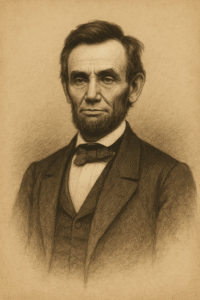
Although the Union was preserved and slavery was abolished with the 13th Amendment, the war left the nation deeply scarred. More than 600,000 soldiers died, making it the deadliest conflict in American history. The postwar period, known as Reconstruction, attempted to rebuild the South and integrate formerly enslaved people into society, but political conflict, racial violence, and discriminatory laws continued to shape American life for decades.
The legacy of the Civil War endures today. It redefined the meaning of freedom, reshaped federal authority, and set the stage for future civil rights movements. It remains a central chapter in understanding the United States—its struggles, its contradictions, and its ongoing efforts to realize the ideals of equality and democracy.