
The land that is now known as Israel has a long, layered, and often contested history that stretches back thousands of years. Its strategic location between Africa and Asia made it a crossroads of ancient civilizations, religions, and cultures. Because of its deep historical significance to Jews, Christians, and Muslims, the region has been shaped by waves of migration, conquest, and political change. Understanding the modern State of Israel requires exploring the ancient roots, imperial eras, the rise of nationalism, and the major geopolitical events of the twentieth century.
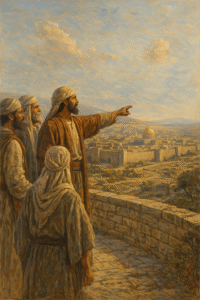
The earliest known inhabitants of the region were diverse Canaanite tribes. These groups lived in fortified towns and cultivated the fertile valleys that surrounded the region. Around the late second millennium BCE, a population identified in both archaeological evidence and biblical texts as the Israelites began establishing themselves in the highlands of Canaan. Their early society was tribal, loosely organized, and connected by shared religious traditions, which eventually developed into Judaism.
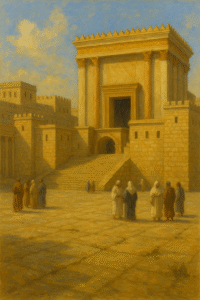
Around 1000 BCE, the Israelite tribes unified under King David, who established Jerusalem as the political and religious center. His son, King Solomon, built the First Temple, a landmark of ancient Jewish worship. After Solomon’s death, the united kingdom split into two: the northern kingdom of Israel and the southern kingdom of Judah. These two kingdoms eventually faced conquest by regional empires. The Assyrians destroyed the northern kingdom in 722 BCE, and the Babylonians captured Jerusalem in 586 BCE, destroying the First Temple and exiling many Jews to Babylon. These events became foundational memories in Jewish identity.
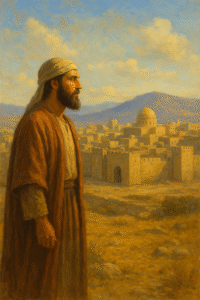
In 539 BCE, the Persians defeated Babylon and permitted Jewish exiles to return, leading to the reconstruction of the Second Temple. Over the next centuries, the region was absorbed into the Hellenistic world following the conquests of Alexander the Great. Cultural clashes between Hellenistic rulers and Jewish populations sparked the Maccabean Revolt, which established the short-lived Hasmonean dynasty. This independence ended when the Roman Empire annexed the region in 63 BCE.
Roman rule was marked by tension and several major Jewish rebellions. In 70 CE, after the First Jewish Revolt, Roman forces destroyed the Second Temple, a moment of immense trauma in Jewish history. A second revolt, the Bar Kokhba Revolt (132–135 CE), led to even harsher Roman responses: Jews were banned from Jerusalem, and large populations were dispersed across the Mediterranean. This dispersion marked the beginning of the long Jewish Diaspora, during which Jewish communities lived outside their ancestral homeland for nearly two millennia.
Over the next 1500 years, the region fell under a sequence of empires: Byzantine Christian rule, early Islamic caliphates, Crusader control, and eventually the Mamluk Sultanate. Beginning in 1517, the Ottoman Empire controlled the territory for four centuries. During this period, Palestine—its widely used name at the time—was a multicultural, largely rural province inhabited by Arab Muslims, Arab Christians, Jewish minorities, and other ethnic communities. Although small Jewish populations remained, most Jews lived in diaspora communities spread throughout Europe, North Africa, and the Middle East.
In the late nineteenth century, the rise of European nationalism and increasing antisemitism gave birth to modern political Zionism. Zionism called for establishing a national homeland for Jews in the historic land of Israel. Between the 1880s and early 1900s, waves of Jewish immigrants began arriving in Ottoman Palestine, purchasing land and establishing agricultural settlements. Although the numbers were still small compared to the Arab population, the demographic landscape slowly shifted.
After World War I, the Ottoman Empire collapsed, and Britain took control of Palestine under a League of Nations Mandate. In 1917, Britain had issued the Balfour Declaration, expressing support for a “national home for the Jewish people” in Palestine while promising to protect the rights of its Arab inhabitants. This dual commitment proved difficult to manage. Jewish immigration increased during the 1920s and 1930s, especially as European Jews fled persecution and, later, the Holocaust. Tensions between Jewish and Arab communities escalated into strikes, revolts, and violence.
By 1947, Britain announced it could no longer manage the conflict and turned the issue over to the United Nations. The UN proposed partitioning Palestine into two independent states—one Jewish and one Arab—with Jerusalem under international administration. Jewish leaders accepted the plan; Arab leaders rejected it. When Britain withdrew in 1948, Jewish leaders declared the establishment of the State of Israel. Neighboring Arab states invaded, sparking the first Arab-Israeli war. Israel survived the war and expanded its territory beyond the UN plan. More than 700,000 Palestinians became refugees, an event they call the Nakba (“catastrophe”).
In the decades that followed, Israel fought several major wars, including the Six-Day War in 1967, in which it captured the West Bank, Gaza Strip, East Jerusalem, the Sinai Peninsula, and the Golan Heights. These territorial changes dramatically reshaped the region and remain central to political disputes today. Israel returned Sinai to Egypt as part of the 1979 peace treaty, and a later treaty with Jordan in 1994 secured another major diplomatic breakthrough.
Today, Israel is a technologically advanced and diverse society, home to Jews from many parts of the world as well as a significant Arab minority. Yet the Israeli-Palestinian conflict remains unresolved. Core issues—Jerusalem, borders, refugees, and security—continue to shape political life and regional dynamics. The modern State of Israel is thus the outcome of ancient traditions, imperial histories, nationalist movements, and complex twentieth-century p olitical struggles.